
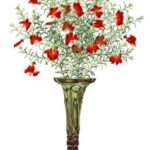
 If you would be willing to sponsor the Altar Flowers on Sunday, November 15th, please contact Celia Wenger.
Friday, October 30th
– the Men will gather for cigars at 6PM. See the calendar for details.
Sunday, November 1st – The 1st Annual Chili Cookoff
– Please plan to bring a crockpot of your best chili. We will have multiple awards and a youth division!
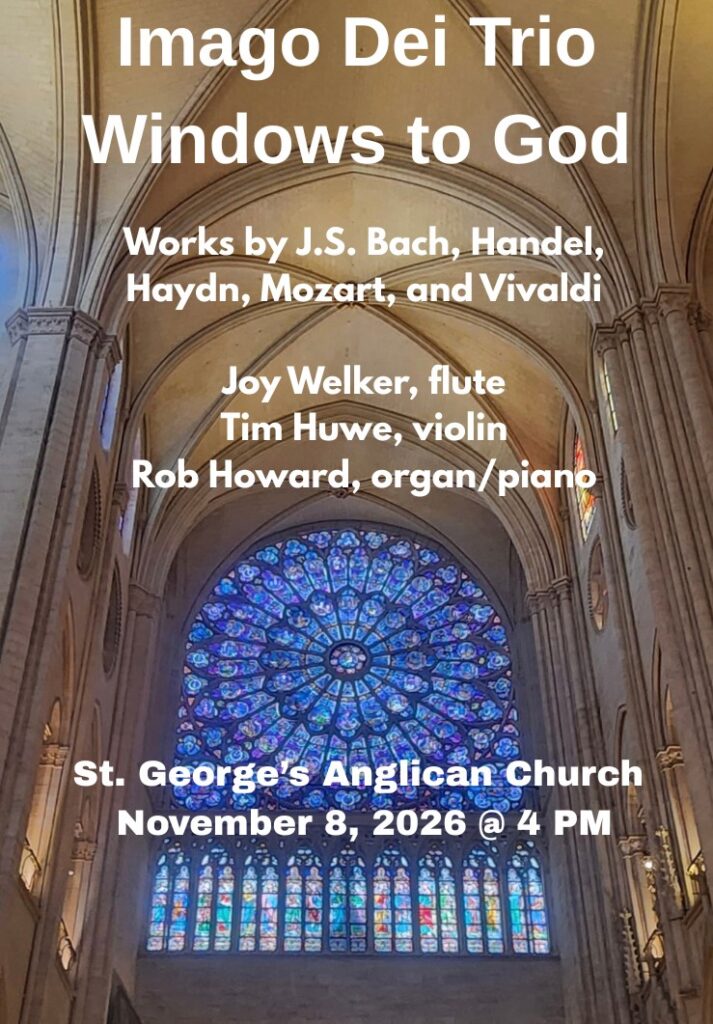
Sunday, November 8th – Imago Dei Trio
Bishops Hugh Latimer and Nicholas Ridley, d. 1555
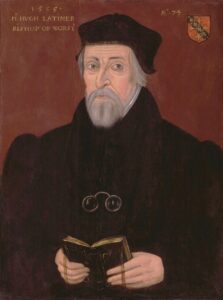
Hugh Latimer (c. 1487–16 October 1555), of yeoman stock at Thurcaston, Leicestershire, was trained at Cambridge and for a time a zealous opponent of the continental reformers. Converted about 1524 through Thomas Bilney, he became one of the university’s leading evangelical preachers. His Advent “Sermons on the Card” (1529) drew royal notice. Henry VIII made him Bishop of Worcester in 1535. He pressed reform and the removal of images in his diocese, but refused the Act of Six Articles (1539), resigned the see, and was imprisoned. Released under Edward VI, he did not resume a bishopric. He served instead as court preacher. The Sermon of the Plough (1548) is the best-known specimen of his manner: plain, homely, unsparing of prelates, and insistent that the poorest ploughman is equal in Christ with the greatest prince. Arrested soon after Mary I’s accession in 1553, he was held in the Tower and then at Oxford.
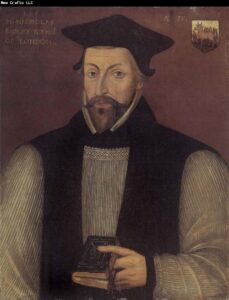 Nicholas Ridley (c. 1500–16 October 1555), of South Tynedale, Northumberland, was the scholar of the pair. Pembroke Hall, Cambridge, further study abroad, and the mastership of Pembroke (1540) formed him. He became chaplain to Cranmer and to Henry VIII, Bishop of Rochester in 1547, and Bishop of London in 1550, displacing Edmund Bonner. In London he made the diocese a pattern of Edwardian reform: stone altars removed, wooden tables set for the Lord’s Supper, and transubstantiation denied in favor of a spiritual, not carnal, presence. He assisted Cranmer in the Prayer Books of 1549 and 1552 and sat on the commissions that deprived Gardiner and Bonner. He also backed the attempt to set Lady Jane Grey on the throne. Mary’s accession brought his arrest in July 1553.
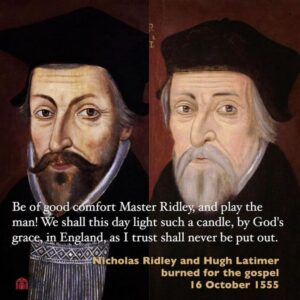 Both were examined at Oxford in 1554 and formally condemned for heresy in the autumn of 1555, chiefly for their eucharistic doctrine and their rejection of papal jurisdiction. On 16 October 1555 they were burned together outside Balliol College. Latimer died quickly. Ridley’s death was prolonged by ill-laid wood. Foxe records Latimer’s words at the stake: “Be of good comfort, Master Ridley, and play the man; we shall this day light such a candle, by God’s grace, in England, as I trust shall never be put out.” Ridley commended his spirit to God and would not recant.
With Cranmer, burned on the same ground on 21 March 1556, they are the “Oxford Martyrs”. Foxe’s Acts and Monuments fixed their deaths in English Protestant memory. The Martyrs’ Memorial in Oxford and the Church of England commemoration on 16 October keep the date. Latimer supplied the popular voice of the Edwardian reform; Ridley supplied much of its learned eucharistic and liturgical shape. Neither recanted, even when facing torture and death.
September Pantry Needs for Mercy’s Gate

PRIORITY NEEDS
- Toilet paper
- Peanut butter
- Tuna
- Canned fruit
- Jelly
- Ramen
- Canned vegetables
- Pasta (not spaghetti)
- Spaghetti Sauce
- Cereal
- Oatmeal
- Canned Beans
- Canned Chicken

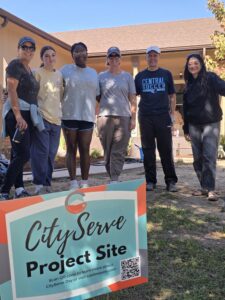
Thank you to all who served during the Annual Fall City Serve 2026
Volunteers helped clean up Cottonwood Creek Park and a Foster Family’s home. Multiple bags of trash were collected and the Foster Family was super grateful.