
Friday, October 2nd
The 2026 Life Network Gala

St. George’s is proud to sponsor a table at the 2026 Life Network Gala!
Silent Auction begins at 5PM.
Dinner and Program begin at 6:30PM.
The Reverend Odell will be giving the innvocation.
If you would like to attend this fundraiser for Life Network, please contact our Parish Administrator, Karine.
Saturday, October 3rd
Fall City Serve

Please join St. George’s Anglican Church as we partner with COS I Love You for their annual Fall City Serve day. This is a great opportunity to give your time and hard work to show Christ’s love through participating in a project.
Different projects include school clean up, yard work, or supporting our local heroes/first responders with gift bags and letter writing.
Please email stgacfamilies@gmail.com if you are interested in participating. We will share options and coordinate groups from STGAC.
 Foyer Dinner Club
Casual Evening Meal & Fellowship
- Foyer groups will be made up of upto 8 parishioners for the purpose of getting to know one another.
- Starting in October, we will meet the 2nd Friday of each month from 6:00PM to 8:30PM rotating host homes.
- Meals are the host’s choice: casual sit-down, hotdogs/hamburgers, or even pizza.
Contact Sheri Tomerlin or Laurie Emery for more details, or stop by during Ministry Fair! Contact Sheri Tomerlin or Laurie Emery
Resource of the Week:
Article: Christian, Your Suffering Isn’t Pointless, by O. Alan Noble
 At one point or another, we all suffer. But what adds to our suffering is the suspicion that it’s meaningless. If our suffering serves a just cause, we can at least endure knowing it does something noble. Or if our suffering is the just consequence of our sin, at least we can accept responsibility for our actions.
But often we find ourselves in situations like Job’s, where we aren’t suffering nobly or justly. We’re just suffering. We fall ill. Someone hurts us. Our minds betray us. Our child gets sick. Our job is downsized. We lose a loved one. Nothing noble or just, only suffering.
It’s in these circumstances that we’re most tempted to doubt and despair, because we cannot see the pattern, the order to existence. Where’s the meaning in all this suffering? How is God glorified if I suffer for no apparent reason? You can hear the echoes of Job: “Why is light given to a man whose way is hidden, whom God has hedged in?” (3:23).
And without meaning, suffering is exponentially harder to endure.
Audio version by the author is also available at the link
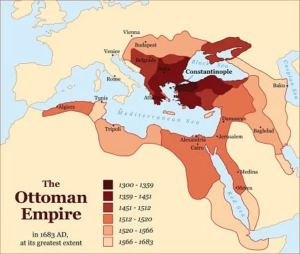 In July of 1683 the Ottomans lay siege to Vienna with 150,000 troops, under the ambitious leadership of Black Mustafa, the Empire’s grand vizier. As the siege dragged on and hunger and exhaustion began to fell the city’s inhabitants, frantic pleas for assistance were sent out to the leaders of Christian Europe, calling for men and arms, to repel the invaders. A massive relief force made up of soldiers from Saxony, Baden, Franconia, Bavaria, Swabia, and Poland began to lumber towards Vienna.
During early September, approximately 5,000 experienced Ottoman sappers had repeatedly demolished large portions of the walls creating gaps of about 12 metres (39 ft) in width. In response to this, the Viennese began digging their own tunnels to intercept the placing of large amounts of gunpowder in the caverns. The Ottomans finally managed to occupy the Burg ravelin and the low wall nearby on 8 September. Anticipating a breach in the city walls, the remaining Viennese prepared to fight in the inner city.
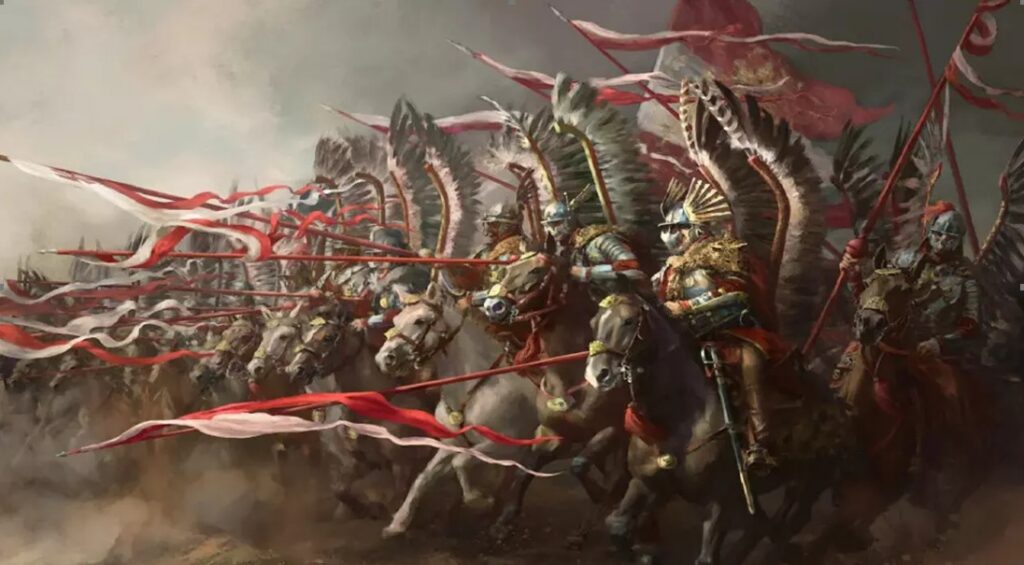
The battle began on September 11, 1683. As Black Mustafa and the Turks tried desperately to force their way into the city before the relief troops could arrive, the Polish King Jan Sobieski emerged from the forests on the hills above. At 6 PM, at his command, an awe-inspiring cavalry charge plunged over the crests of the hills and pounded towards the invaders, a magnificent force of 18,000 horsemen—the largest cavalry charge in history. The Polish king, at the head of 3,000 heavy lancers known as the Winged Hussars, led the charge. The knights were named for the wings of birds of prey attached to the backs of their armour, which streamed behind them in the wind and made them resemble a cloud of avenging angels.