

 Foyer Dinner Club
Casual Evening Meal & Fellowship
- Foyer groups will be made up of upto 8 parishioners for the purpose of getting to know one another.
- Starting in October, we will meet the 2nd Friday of each month from 6:00PM to 8:30PM rotating host homes.
- Meals are the host’s choice: casual sit-down, hotdogs/hamburgers, or even pizza.
Contact Sheri Tomerlin or Laurie Emery for more details, or stop by during Ministry Fair! Contact Sheri Tomerlin or Laurie Emery
Resource of the Week:
How to Use the Book of Common Prayer of 1928 at Home
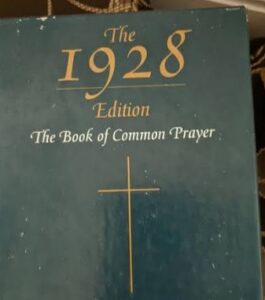 In this video titled, How to use of the Book of Common Prayer (1928), Fr. Tony of Christ the King Anglican in Atlanta, GA trains on how to pray the Office of Morning and Evening Prayer on your own, as well as walks through the rest of the Prayer Book.
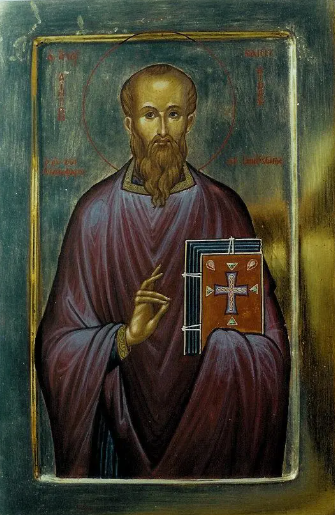 St. Aidan of Lindisfarne (c. 590–31 August 651)
St. Aidan was an Irish monk of Iona whose patient, apostolic mission restored the faith in northern England after the collapse of the earlier Roman mission under Paulinus.
Life. Born in Ireland and formed in the Columban tradition, Aidan lived as a monk on Iona. When King Oswald of Northumbria, himself baptized during exile among the Scots, requested a bishop, Iona first sent a severe preacher who failed. Aidan observed that the man had given “meat instead of milk.” The community judged Aidan fit by that discretion, consecrated him bishop, and dispatched him with twelve companions in 635. He chose the tidal island of Lindisfarne, near Oswald’s fortress at Bamburgh, as his see—an Iona in miniature.
Ministry. For sixteen years Aidan walked the kingdom rather than rode, speaking to high and low, baptizing, ransoming slaves, educating English boys for the priesthood, and giving away whatever kings or nobles placed in his hands. Oswald interpreted for him until the king fell at Maserfield in 642; King Oswine of Deira then became his friend and patron. Aidan founded churches and monasteries, trained the generation that produced Hild, Cuthbert, Eata, and Chad, and held to Celtic Easter reckoning even while Bede later praised his life as a model of episcopal humility. In 651, when Penda of Mercia fired Bamburgh, Aidan’s prayer is said to have turned the wind. He died eleven days after Oswine’s murder, leaning against a wooden buttress of the church at Bamburgh. That timber survived two later fires and was kept as a relic.
Legacy. Lindisfarne became the missionary heart of the North. Its school formed native clergy; its successors carried the Gospel into Mercia and Essex. Aidan is commemorated on 31 August by Catholics, Orthodox, and Anglicans, and is invoked as patron of firefighters. Bede, writing within living memory, called him a man of singular gentleness who taught nothing he did not himself practice. The island he chose remains Holy Island; the church he planted outlasted the Synod of Whitby and the Viking raids that later wrecked its buildings. His method—milk before meat, presence before prestige—remains the standard by which later English missions have been measured.